
The Belle of the Barn
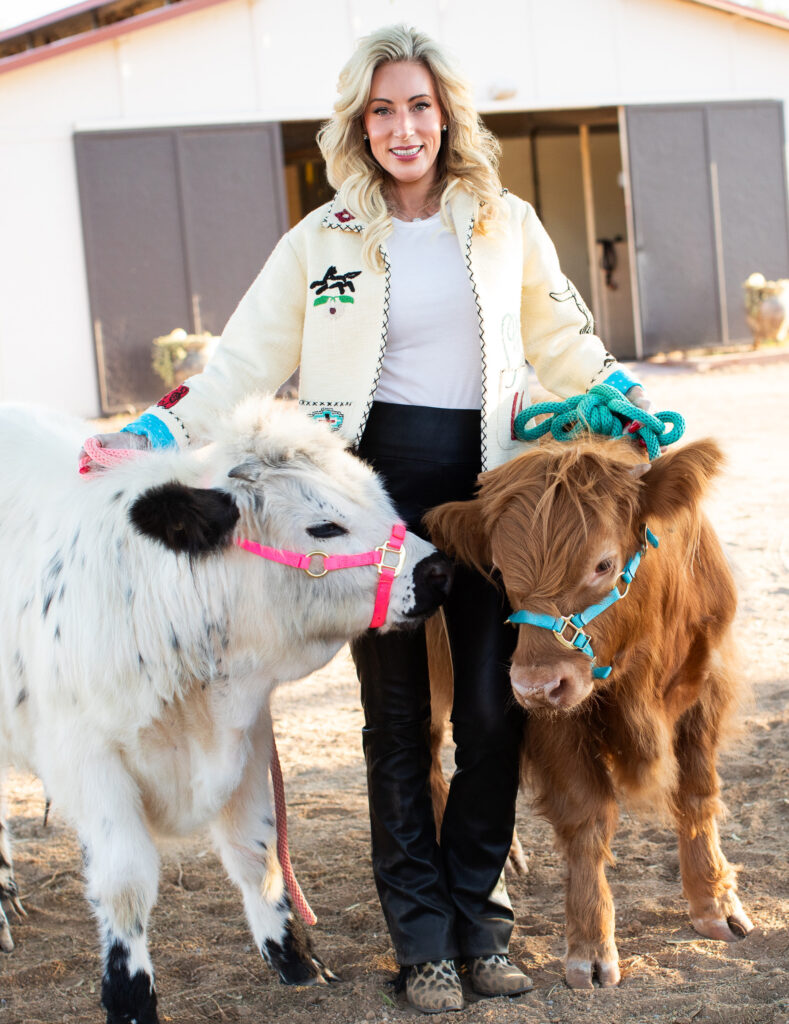
The Arizona sun beats down on a Scottsdale cul-de-sac, the kind of neighborhood where the yards are wide and the silence is expensive. But follow the curve of the road and the suburban script flips. Tucked between residential lots is a sanctuary that smells of fresh hay and ambition. At the center of it stands Andrea Robertson. She is, by any definition, magnetic — strikingly attractive, stylishly dressed and possessing the kind of confidence that can make a dusty paddock feel like a runway.
But as soon as she speaks, the polished persona dissolves into something more powerful: a mother on a mission.
Andrea isn’t here for the aesthetic, though it is undeniably charming. She is here for Lexie, her 24-year-old daughter, and for the hundreds of families like hers who have spent decades navigating the labyrinth of special-needs care.
“God doesn’t make mistakes,” Robertson said. “I have to protect her, so I’ll go out there and figure it out.”
A Legacy Born of a Fight
The story of Lexie’s Ranch is, at its heart, a story of legislative grit. Years ago, when Lexie was a young child, the educational system attempted to sideline her. Because she was a girl — and at the time, autism diagnoses were heavily skewed toward boys — doctors and school districts were slow to see her true needs. They offered her a classroom that didn’t fit; Andrea offered them a fight.
That fight led to the creation of “Lexie’s Law,” a landmark tax credit program in Arizona that allows corporations to redirect state tax liability toward scholarships for special-needs, military and foster families. Today, that program has a $22 million cap and has been mirrored in more than 30 states. But for Robertson, the systemic victory was only the beginning. As Lexie grew, the “cliff” loomed — the terrifying moment when children with developmental disabilities age out of the school system and find themselves with nowhere to go.
“If they aren’t high-functioning enough to go to a job or a day program where they can speak for themselves, they aren’t necessarily safe,” Robertson said. “Lexie would essentially just be at home. What I’m doing bridges that gap.”
The Mini Cow Revolution
The crown jewels of the ranch — and the cover stars of this magazine — are Linny and Pepper, two mini Highland cows with long coats and the temperament of oversized Golden Doodles.
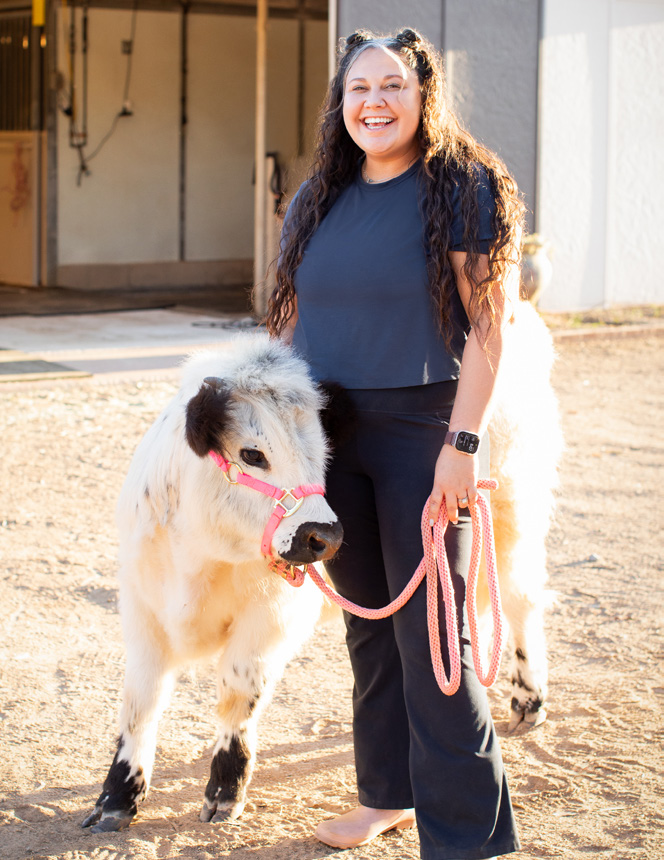
“We got them when they were four weeks old,” said Tiana Garcia, the ranch’s director and recreational therapy specialist. “They were in the house the first night. We were bottle-feeding them.”
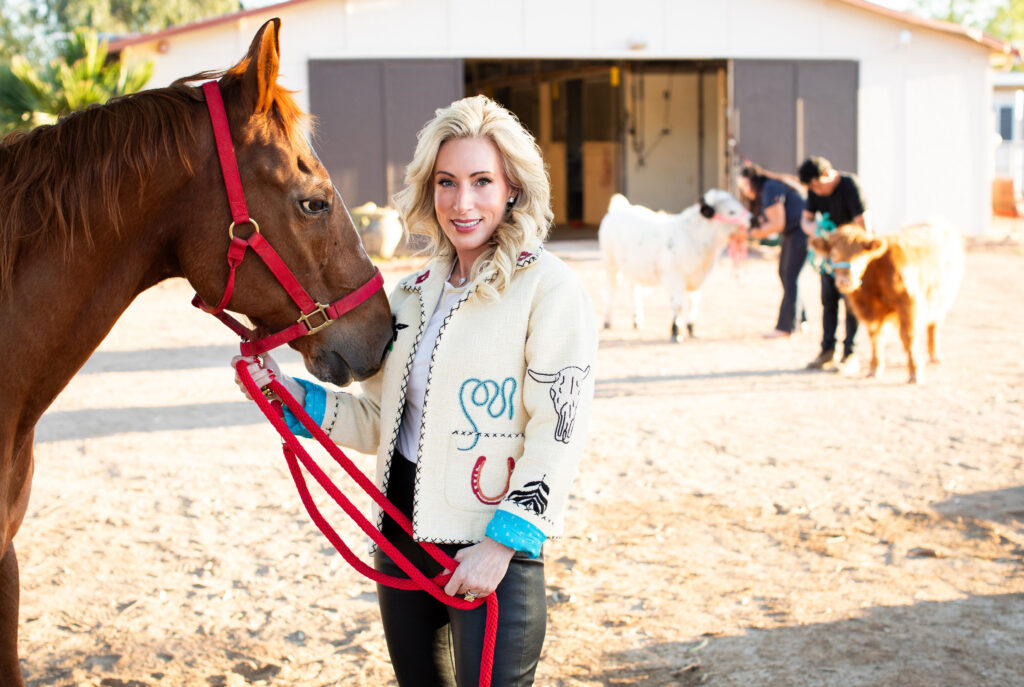
Linny and Pepper aren’t just for show. In the world of Lexie’s Ranch, animals are the ultimate therapists. While horses like Romeo — the 33-year-old senior statesman of the barn — and the newly arrived JD offer equine therapy, the mini cows provide a uniquely accessible entry point for students.
“They’re small enough where you can connect with them,” Garcia said. “They want to be touched. They get jealous if I’m giving one attention and not the other.”
For students like Alex, whose entire family recently moved from Boston just to join the program, the animals are a grounding force. When the world becomes too loud or a student gets “stuck in their head,” the simple, rhythmic act of brushing a mini cow’s long hair can break the cycle of anxiety.
A Sanctuary for the “Unapologetic”
The ranch is currently a hive of transformation, a suburban flip led by Robertson’s husband, Brad, who adopted her daughters and helped secure the property just a mile away from their home. They’ve torn down 20 horse stalls to make room for an “Activity Barn” — envisioned not as a sterile facility, but as a YMCA-like hub for basketball, rock climbing and sensory rooms.
The ranch’s soul is a family affair. The day program, Charlie’s Treehouse, is named for Lexie’s neurotypical twin sister, who saw the “cliff” of adulthood approaching and refused to let her sister fall.
“Lexie can’t go to any other programs,” Charlie told her mother. “They aren’t safe. She’s going to get left behind.”
Together with Garcia, Charlie built a government-funded day program for adults where they aren’t patients — they’re the boss.
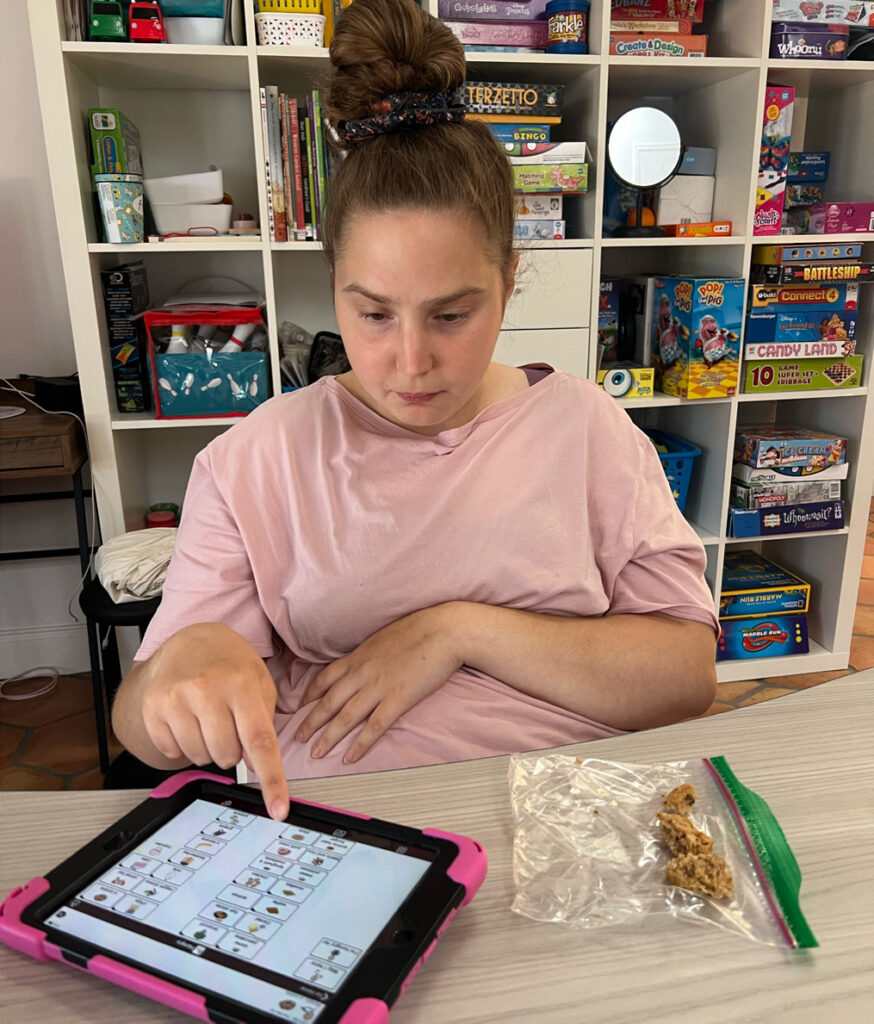
The goal is intimacy over scale. Charlie’s Treehouse is capped at 12 students to ensure the “easy” kids — those who are quiet or non-verbal — don’t disappear into the background. Here, the schedule is a conversation. While Lexie doesn’t use words, she is far from silent. Using her iPad and a specialized button system, she negotiates her day with the skill of a seasoned negotiator.
“She has an attitude,” Garcia laughed. “She’ll look at me and hit a button that says, ‘Girl, you crazy,’ and I’m like, ‘I know I’m crazy, Lexie. We have a farm. We’re a little crazy!’”
If Lexie wants to listen to music — she’s a fan of “Good Things Fall Apart” by Illenium — the “DJ booth” opens at 3 p.m. If students want to go to Target to practice life skills, they go. It is a level of autonomy rarely afforded to people with disabilities, and it is transformative.
“Our population doesn’t have a place where they can just unapologetically be themselves,” Robertson said. “Where their families can come and relax.”
The impact is already visible. There is Piper, a young woman who spent four years in a wheelchair at her previous school and hasn’t used it for a single day since arriving at the ranch. There is the “sensory experience of the water” in the shaded pool, where Lexie transforms into what Garcia calls a “little mermaid.”
The Vision Ahead
As Robertson walks the property, her eyes are already on the empty land next door. She has named several of the ranch’s inhabitants after characters from Lexie’s favorite TV show, “Wonder Pets!” — Linny the cow, Tuck the tortoise — creating a real-world manifestation of her daughter’s joy.
She envisions a school for “the littles” next, getting 3-year-olds ready for a world that might not always understand them, but will certainly have to respect them.
Lexie’s Ranch isn’t just a philanthropic project; it’s a family’s heart laid bare in the Arizona dirt. It is a place where high fashion meets muddy hooves, where a mother’s fierce advocacy has built a literal playground for those the world too often ignores.
As the sun sets, the silhouette of the barn glows against the orange Scottsdale sky. In the center of the field, Linny approaches Robertson, nosing at her affectionately as his “sophisticated” middle part blows in the breeze. Robertson smiles, looking every bit the magazine icon, yet entirely at home.
She isn’t just building a ranch; she’s building a future where Lexie’s voice — iPad and all — is the loudest one in the room.
From Lexie’s Law to Lexie’s Voice
While Lexie’s Law changed the legislative landscape for scholarships, Lexie’s Voice was born from a more personal need: supporting the people who make the special-needs world go around.
“We can’t live without our caregivers like Tiana,” Robertson said.
Lexie’s Voice provides “quick grants” and support for therapists and teachers whose wages often don’t match the vital importance of their work. By supporting caregivers, the foundation ensures that students’ “holistic life” remains stable.

Karen Werner is the editor of Frontdoors Media. She is a writer, editor and media consultant. She has interned at The New Yorker, worked at Parents Magazine, edited five books and founded several local magazines. Her work has appeared in Sunset, Mental Floss and the Saturday Evening Post.