Play It Forward
Inside the world of Kate Wells, who made play her life’s work — and changed a city


The Zoom call connects, and suddenly I’m in Milan. Or rather, I’m looking through a digital portal into the sun-drenched Italian apartment of Kate Wells’s firstborn, Tesla. The irony is not lost on me: To understand the woman who created one of the most dynamic, hands-on spaces for children in the Southwest, I must first connect via the globetrotting young adult her vision helped shape.
Wells, the effervescent cofounder and CEO of the Children’s Museum of Phoenix, soon appears on screen, not from a sterile boardroom, but from the warm orbit of family — which is fitting given her life’s work. Tesla, 28, is training in elite competitive fencing in Italy, a living example of a mother’s belief in the power of hands-on learning and wide-open possibility.
This is Kate Wells in her element: orchestrating, connecting and bridging worlds with an effortless warmth that belies the fierce entrepreneurial spirit beneath. It’s that same spirit that transformed a historic schoolhouse once slated for demolition into an epicenter of childhood wonder.
The Children’s Museum of Phoenix recently celebrated its 17th anniversary and welcomed its 5 millionth visitor, a staggering testament to a dream that began with, as Wells puts it, questionable qualifications. “My qualification was that I could write grants and throw fun parties,” she said with a laugh that is both self-deprecating and utterly confident.
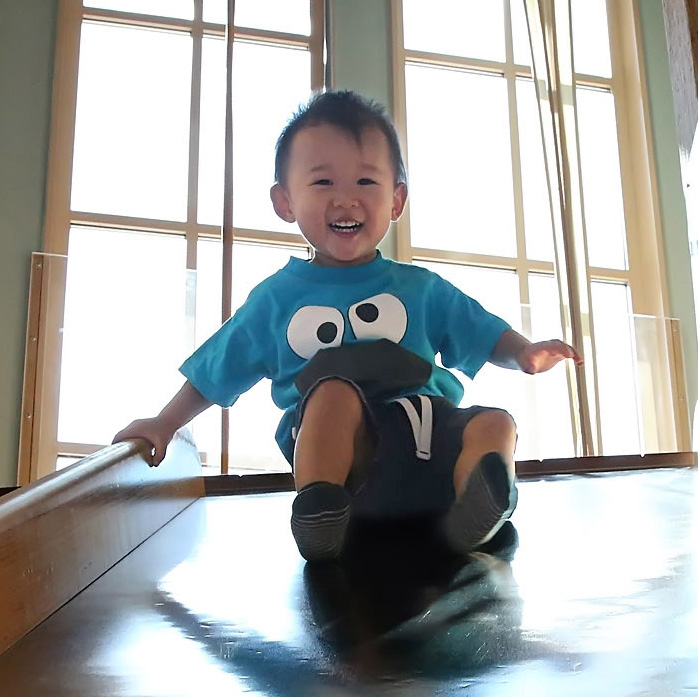
Inside the museum, this unlikely origin story plays out as a kaleidoscope of joy. You hear it before you see it: the cacophony of laughter, the shouts of discovery, the murmur of parents rediscovering their own sense of play. Children swarm through a forest of dangling pool noodles, construct elaborate ball runs on magnetic walls, and shoot scarves sky-high with air-powered pipes. It is a place built on the philosophy of open-ended play, where a 2-year-old and a 10-year-old can approach the same exhibit and both find developmentally appropriate ways to learn and explore.
The impact of these encounters, big and small, has exceeded even Wells’s own grand ambitions. “The individual impacts that people tell us it had on them is something I couldn’t have imagined,” she said. The proof is in the people. “We’ve been open long enough that almost all of our staff, if they’re from the Phoenix metro area, came on field trips or with their families as children.”
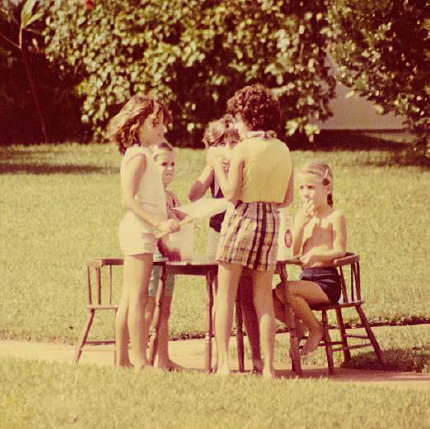
To understand how Wells pulled off such a feat — raising millions, saving a historic building and creating an institution without any formal background in early childhood education — you have to rewind to her self-described “feral” 1970s South Florida childhood. “I had a lot of freedom. We played outside, and I was very entrepreneurial,” she said. She was constantly organizing talent shows and neighborhood events, and ran a Florida version of a lemonade stand, peddling orange juice. This upbringing, fostered by a family that met every audacious idea with a supportive “Of course you can do that,” instilled in her a belief that there is no such thing as failure.



That conviction was critical when she and a group of fellow parents from their children’s Montessori school decided Phoenix needed a world-class children’s museum. “I had no idea what I was doing, but I had no doubt we could figure it out,” Wells said. “I think that a lot of entrepreneurs are like that.” What she lacked in credentials — she owned a coffee house at the time — she made up for with can-do spirit and ample know-how. Wells was a skilled grant writer and a natural organizer. The other founders brought their own expertise, including vital knowledge of early childhood development.
Their strategy was grassroots genius. During a pop-up event in 1998, Wells spent three weekends collecting AOL email addresses from parents while their children played. “In very short order, we had a massive database of 70,000 families who wanted the Children’s Museum to happen,” she said. While other arts organizations had buildings and endowments, Wells’s group had something more powerful: a mobilized constituency of interested parents. This army of voters was instrumental in getting the museum included on a city bond, which secured the initial $10.5 million to purchase and begin renovating the historic Monroe School. For the downtown-dwelling founders, saving the building, which had an active demolition permit, was almost as critical as the museum itself.
The museum’s journey from a nascent nonprofit to a beloved institution was fueled by Wells’s most profound role: being a mother. Tesla was just 18 months old when the incorporation papers were signed. Phoebe followed a few years later.
Observing her children, Wells became a “student of watching them build into these incredible people based on all these little micro experiences,” she said. She recognized the privilege her children had — access to travel, good food, a Montessori education — and felt a deep responsibility to provide that same sense of “beauty and wonder and opportunity for every kid.”
Her own children were integral to the process. They were carted across the globe to visit other museums, their weekends spent at pop-up events, and TV time often paired with stuffing envelopes. They, along with the other founders’ children, physically helped build exhibits, stringing thousands of CDs onto fishing wire to help create the iconic entryway wall.
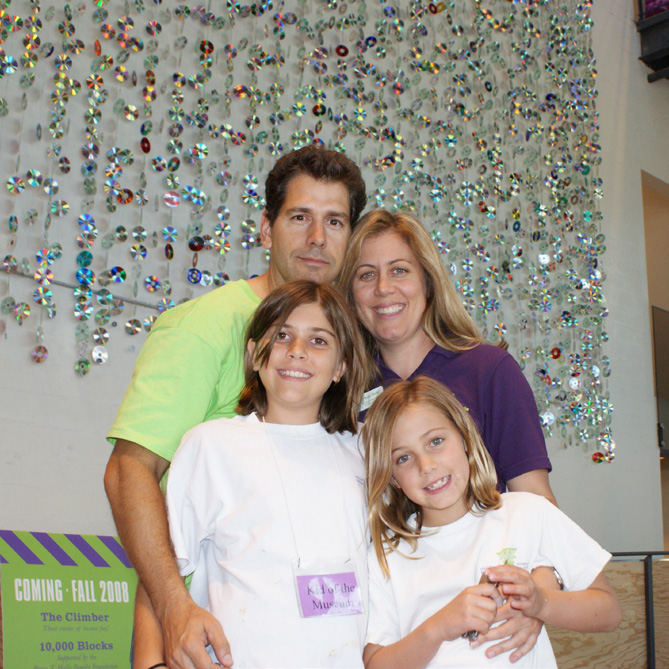
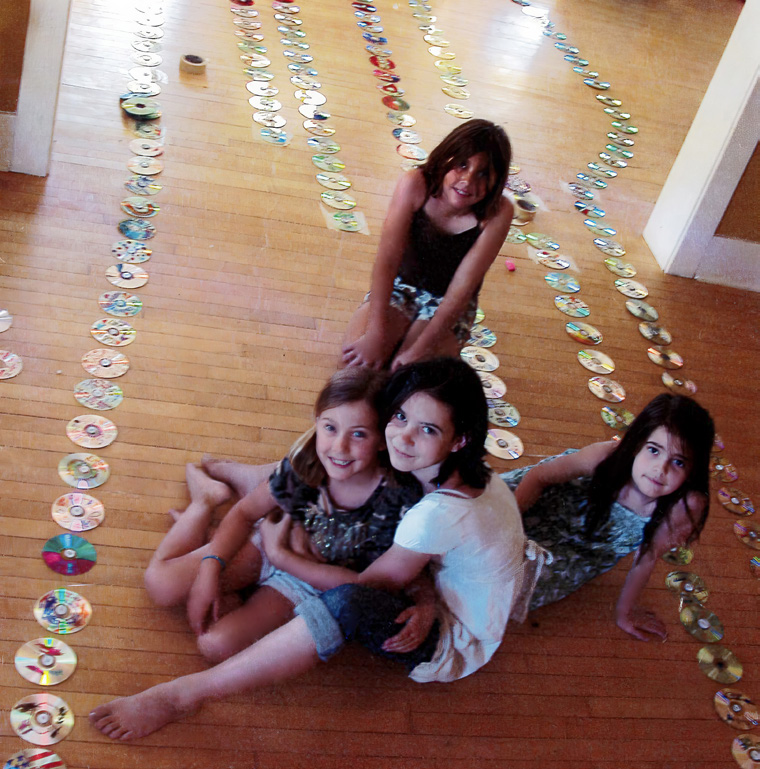


This hands-on, socially responsible upbringing became part of their DNA. Phoebe, after graduating from Barrett, the Honors College at ASU, joined Teach for America and now works at a law firm in New York with an eye to education policy, while Tesla, an MIT grad who got her master’s in autonomous robotics, became heavily involved in student activism and community organizing. “They’re both very involved, which makes my mom heart happy,” Wells said.
Looking back, Wells thinks the peak expression of her tactile educational philosophy was a 14-month family trip around the world, a five-year dream in the making. Pulling her kids out of fourth and seventh grades, Wells and her husband, Jeff, embarked on the ultimate learning adventure. “When you take my dedication to experiential learning, us backpacking around the world was kind of the ultimate,” she said.
Wells’s parenting style and her leadership philosophy are deeply intertwined. “My husband teases me that I think I’m the mom of every child,” Wells said. And indeed, she mothers the museum with the same core principles: Provide resources, opportunity and time — and then get out of the way.
This approach has fostered a remarkable internal culture. Of the museum’s 41 full-time employees, 37 have been promoted from within. “We develop the heck out of them,” Wells said. “If they’re a star, we’re gonna invest in them, provide them what they need, and let them do their thing.”
The stories of these staff members are the stories of the museum itself. There’s the young man named Ernesto who first visited on a field trip when he was 8. Coming from an economically disadvantaged family, he was so awestruck by the kindness and magic he found that he vowed to work there one day. Two days after his 16th birthday, before he even had a driver’s license, he walked in and landed a job, staying with the museum through high school and college. “The people part of it, the individual part of it,” Wells said, “is something I never could have imagined.”
This deep commitment to every child is the museum’s driving force. Access, for Wells, is a multifaceted concept that underpins every inch of the museum. It’s physical, ensuring a child in any size wheelchair can roll right up to the garden beds. It’s developmental, designing exhibits that engage and serve a range of ages. And it is profoundly economic. Through its Every Child program, the museum provided free or reduced admission to 116,000 of its nearly 400,000 visitors last year.
It’s also about creating a welcoming space for families who might otherwise feel excluded, like those with children on the autism spectrum, by providing free passes and special visiting nights. “We say, ‘Come and try the museum,’ because this place is indeed for every child,” Wells said.
That level of accessibility would be impossible without a bedrock of institutional support. Phoenix’s major philanthropic organizations have been long-time champions, a relationship Wells doesn’t take for granted. “The major foundations in town have been champions, and we try really hard to be good stewards of their money,” she said. Among them, Virginia G. Piper Charitable Trust has been a key partner, investing not just in the museum’s programs but in Wells’s leadership by selecting her as a Piper Fellow in 2018.
It’s this kind of backing that makes the museum’s mission possible. “Part of the incredible amount of access that we provide is made possible by some significant and generous foundations,” Wells said. “They recognize for us to have a really healthy city, kids need to grow up and be healthy people.”

For Wells, part of that health comes back to one thing: how we treat each other.
“We have a big focus on character development, and one of the planks that we’re focusing on is kindness — that we really need to, all of us, think about how to be more kind and how to show up in the world in ways that our children would be proud of,” she said. “Our children are watching. We need to be the adults that our children will be proud of, and that our parents would be proud of, too.”
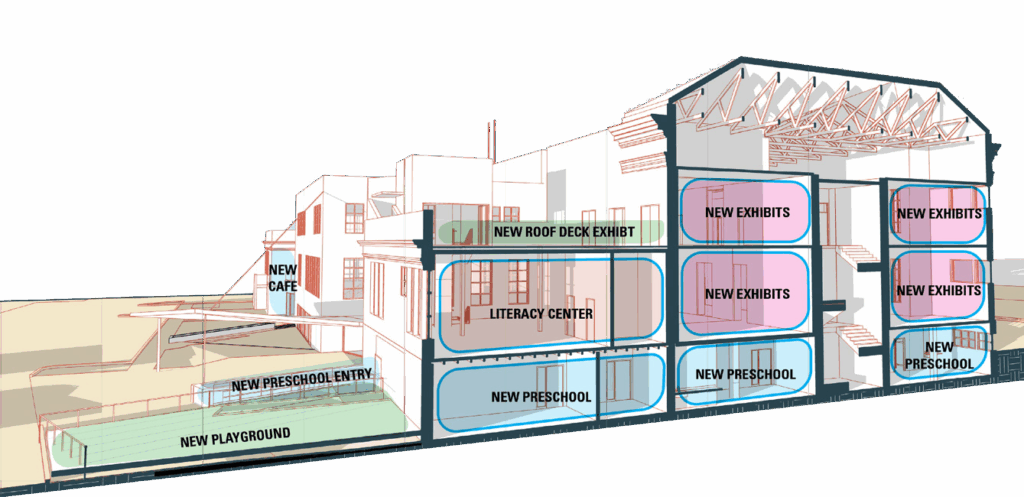
Now, Wells stands on the brink of realizing the museum’s full, original vision. Bolstered by a $5.37 million voter-approved earmark and a $16.5 million capital campaign, a 33,000-square-foot expansion is underway. “We’re bringing in incredible exhibit designers, artists, fabricators — it’s gonna be really amazing,” she said.
The project will add six to eight new exhibit spaces, a dedicated early literacy center, rooftop experiences and, finally, a preschool — a dream since the museum’s inception. Set to open in 2027, the preschool will be run in partnership with Valley of the Sun YMCA and primarily serve low-income families, addressing a critical childcare desert in downtown Phoenix. “It’s kind of my life’s work getting to this place where I can tie a bow on it. We’re almost to the finish line of the things we really wanted to do,” Wells said.
Looking back — and forward — Wells remains grounded in the power of play, possibility and simple acts of kindness. The world has changed since the museum opened 17 years ago, but the awe a child feels entering the noodle forest has not. Her hope now is to ensure this legacy of wonder and goodness endures, to build a foundation so strong that “whoever is after me can do what they need to do based on the work that I did.”
It is, in the end, the ultimate act of a founder — and a mother: creating an opportunity for others to thrive.
To learn more, visit childrensmuseumofphoenix.org.

Karen Werner is the editor of Frontdoors Media. She is a writer, editor and media consultant. She has interned at The New Yorker, worked at Parents Magazine, edited five books and founded several local magazines. Her work has appeared in Sunset, Mental Floss and the Saturday Evening Post.