
The Data-Driven Donor
Nicola “Nikii” Johnston has always seen the world as a puzzle of interconnected pieces. Whether she was looking at cells under a microscope or artifacts in the Arizona dirt, her life’s work has been defined by curiosity: How do things relate to one another, and how can we make them work better?
Today, as a dedicated philanthropist and board member for the SciTech Institute, she is using that same analytical rigor to help strengthen the future of science education in Arizona. But her path to philanthropy wasn’t a straight line — it was a journey that spanned marine laboratories, the halls of the Mayo Clinic and a high-stakes family cattle ranch.
A Foundation in the Lab
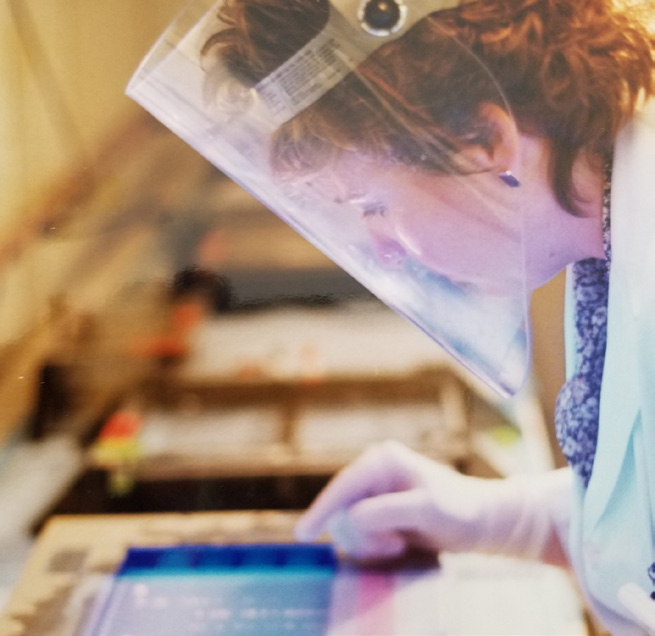
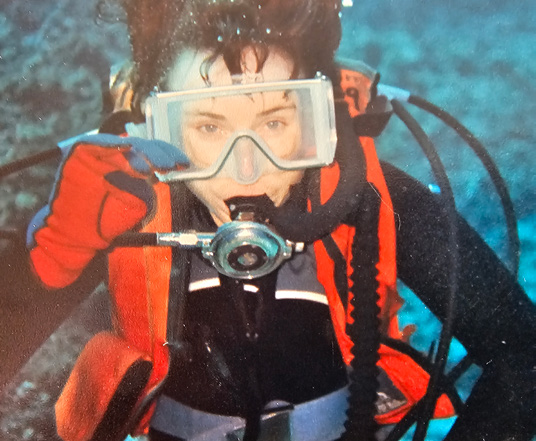
Johnston’s scientific roots run deep. After studying marine biology at UC Santa Cruz and pharmacology at UC Santa Barbara, she transitioned to genetic engineering just as the biotech field was exploding. Her career included a stint at Amgen during its breakthrough years as a pioneer in genetically engineered drugs as well as a pivotal role at the Mayo Clinic in Scottsdale.
At Mayo, Johnston was the first science technician hired for the Scottsdale campus. She was tasked with setting up research labs from scratch — with significant startup support and a mandate to build excellence. Later, she pivoted into administration, where she was asked to solve problems wherever they surfaced, whether in insurance billing systems, operational efficiency or data integration. It was here she honed her ability to look at dashboard reports and see the human stories behind the data.
From Cattle to Contracts
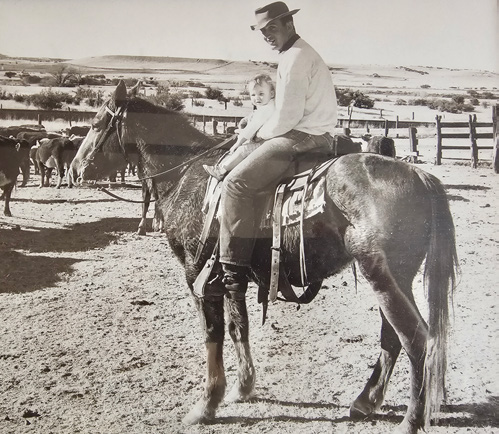
In the late 90s, Johnston’s life took a dramatic turn away from the lab. Her family owned a massive ranch between Chino Valley and Prescott — a property that had been in the family since the 1920s. After her grandfather and mother passed away, Johnston found herself thrust into the role of negotiator, navigating a “land rich, cash poor” situation that involved eminent domain, water rights and millions in estate taxes.
“I was often the only woman in a room with 12 to 15 attorneys,” she said. The pressure was immense, and family tensions ran high. Ultimately, it was Johnston’s project-management brain that found the exit strategy. By proposing a structured “note sale” to a determined buyer, she allowed her family to finally settle their debts and go their separate ways. “It was tough to walk away from land that enveloped my childhood,” she said, “but it started my philanthropy story.”
Finding a Partner in ACF
Coming into significant money was a new challenge for Johnston. “It took me four or five years just to get used to the concept,” she said. “It wasn’t about spending it; it was about managing it and doing right by it.”
Her financial advisor introduced her to Kimberly Kur at the Arizona Community Foundation. For Johnston, ACF was the perfect vetted gateway into giving.
“I didn’t want to just give my money to a company and not know it was being used successfully,” Johnston said. “ACF asks about your passions, they vet the organizations, and they make the logistics seamless.”
Through ACF, Johnston and her husband, Mark — a retired Honeywell engineer — began focusing their giving on STEM education. They utilized a donor-advised fund, which Johnston loves for its simplicity. “I can give stock to ACF, see my balance online, and recommend grants with a click. Plus, they handle the tax letters for everything in one lump sum,” she said.
Inspiring the Next Generation
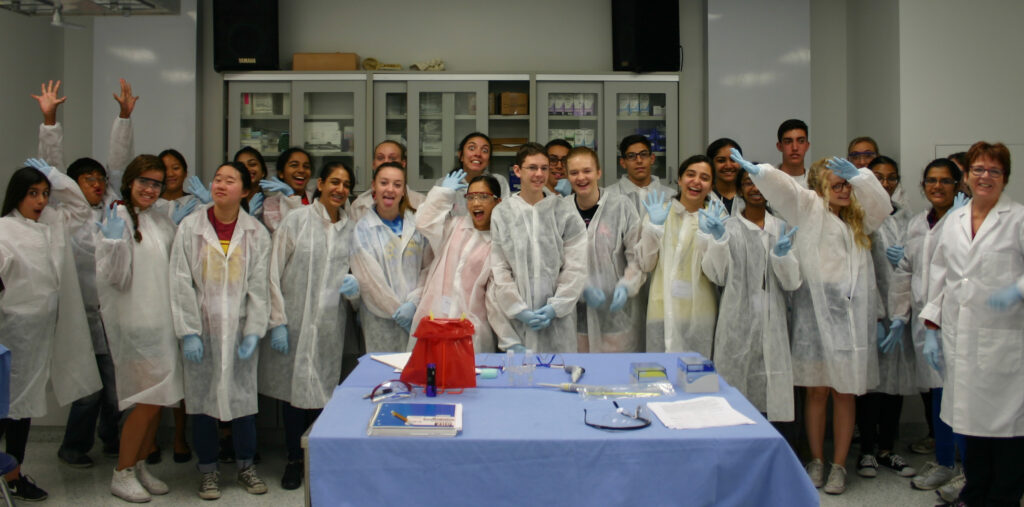
Johnston’s philanthropy is far from hands-off. She spent a decade volunteering at the Arizona Science Center, where she developed a teen science camp at Barrow Neurological Institute. She didn’t just teach biology; she taught “the business of science,” requiring students to form mock pharmaceutical companies and pitch their research.
“I had one student tell me later that she had struggled with her mental health because she felt she wasn’t ‘good enough,’” Johnston said. “Watching her succeed and seeing four out of five of my top students go on to medical research careers … that’s the real return on investment.”
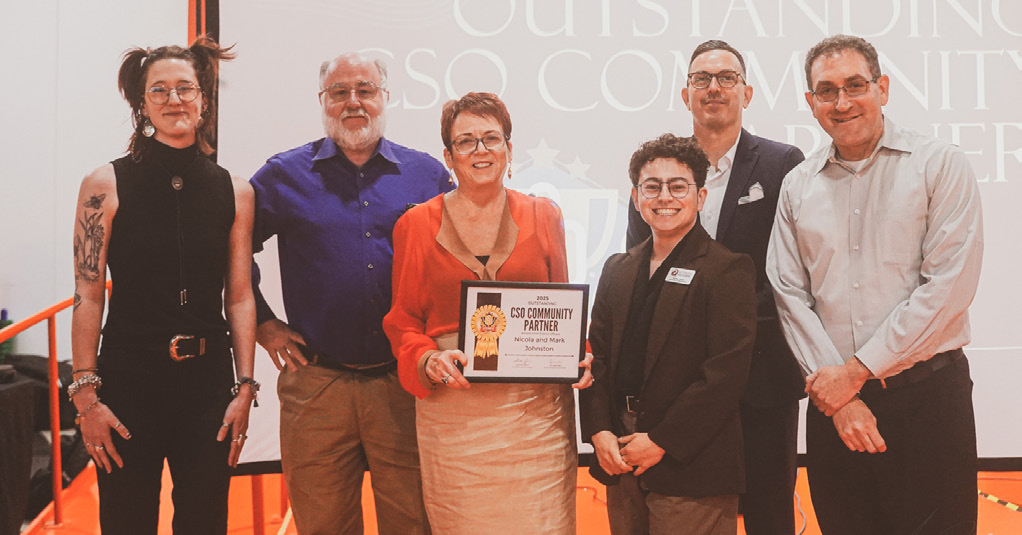
Today, her primary focus is the SciTech Institute and its Chief Science Officer (CSO) program, which empowers teens to serve as science ambassadors in their schools, communities and even at the state level. As a funder, advisor and board member, Johnston is helping shape a broader “workforce ecosystem” that aligns education, industry and government — ensuring Arizona students are prepared for the high-demand tech careers of tomorrow.
Applying the Method
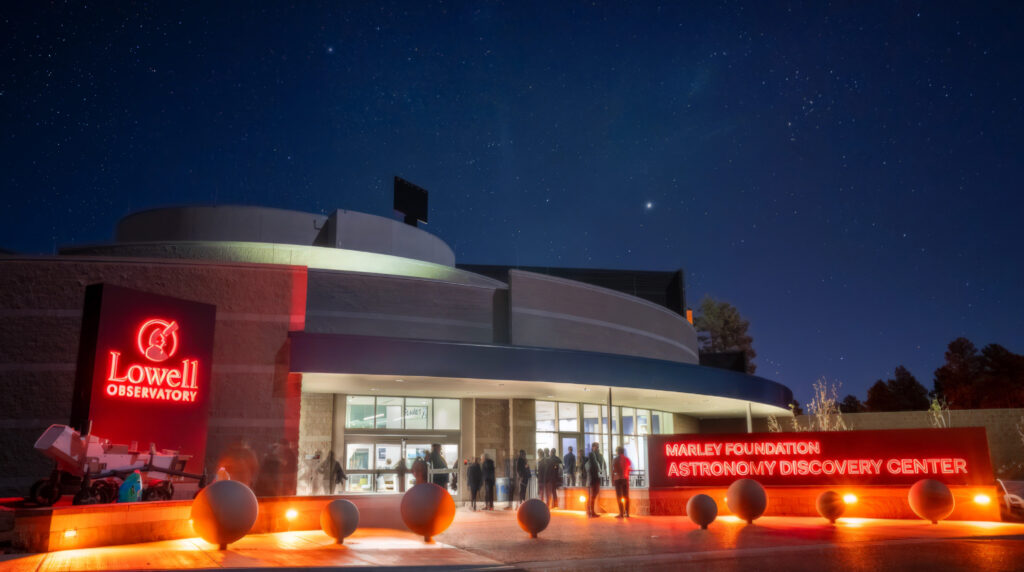
Johnston also supports Lowell Observatory, funding both scientific research and public education — an approach that mirrors her belief in pairing discovery with access. From helping underwrite the observatory’s Discovery Center to supporting cutting-edge astronomical research, she values organizations that balance innovation with outreach.
Johnston rejects the notion of philanthropy as passive or ceremonial. She sees giving as a form of problem-solving — an opportunity to apply experience, insight and curiosity to complex challenges she cares about.
“There’s no one right way to start,” she said. “Dip your toes in. Ask questions. Stay engaged. And if it’s not working, it’s OK to walk away and try something else.”
A Legacy of Connection
Johnston’s approach to giving is much like the lesson her grandmother taught her while hiking the ranch as a child. Her grandmother would draw a circle in the dirt and ask her to identify every object inside — turquoise, pottery shards or shell beads — and explain how they related to one another.
“That taught me that it’s not just one thing,” she said. “It’s how things come together to have meaning.”
Through her collaboration with ACF, Johnston has ensured that this philosophy outlives her. She has already set up her legacy plan through ACF, allowing her to support her favorite causes in perpetuity without the need to constantly rewrite complex legal trusts.
For Nikii Johnston, philanthropy isn’t just about writing a check — it’s about applying a scientist’s mind and a steward’s eye to build a stronger Arizona.

Karen Werner is the editor of Frontdoors Media. She is a writer, editor and media consultant. She has interned at The New Yorker, worked at Parents Magazine, edited five books and founded several local magazines. Her work has appeared in Sunset, Mental Floss and the Saturday Evening Post.