
The Geometry of Hope
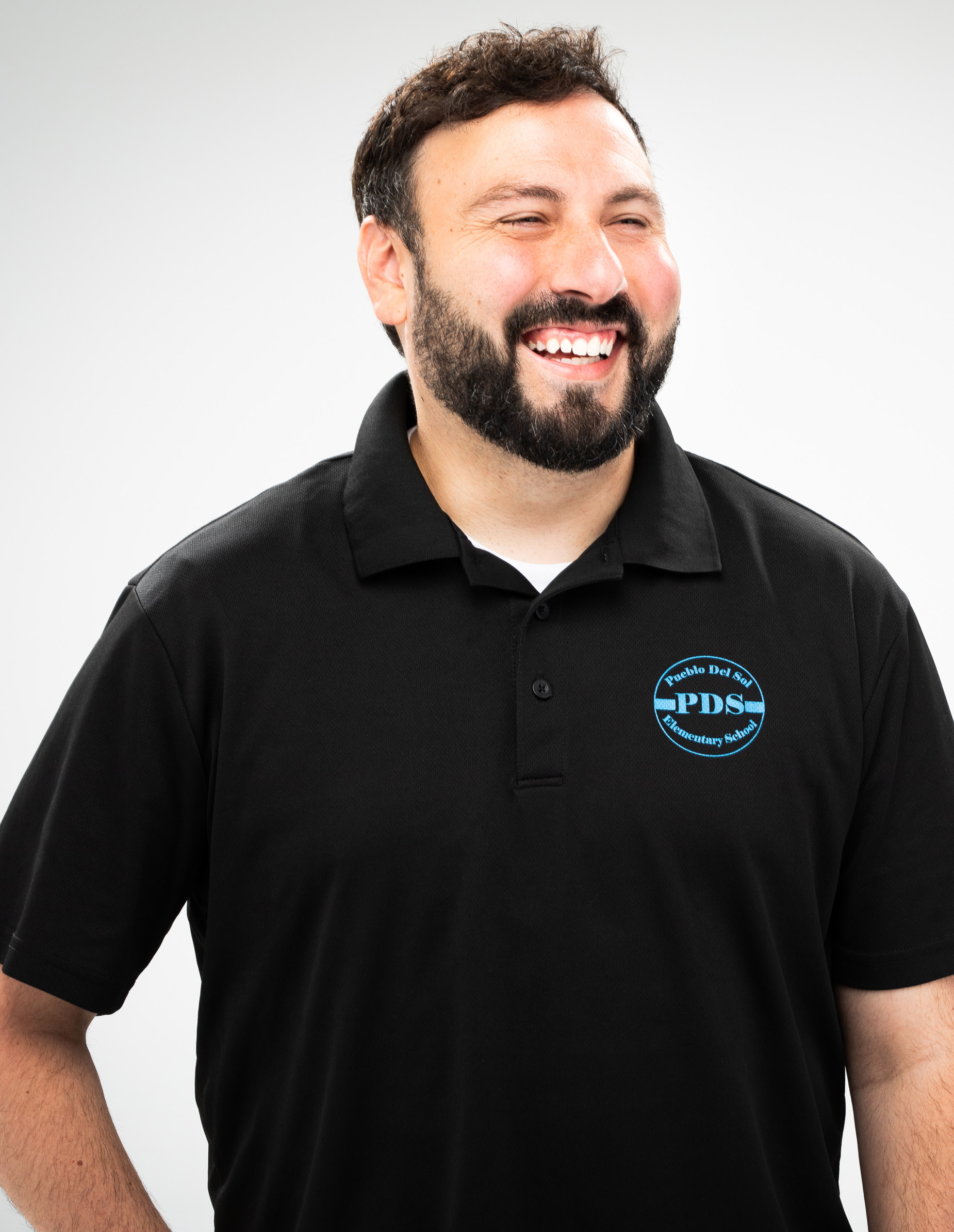
In the West Phoenix neighborhood of Maryvale, where ZIP code has long shaped opportunity, a revolution is being led by a man with a big personality and a radical obsession with eighth-grade math.
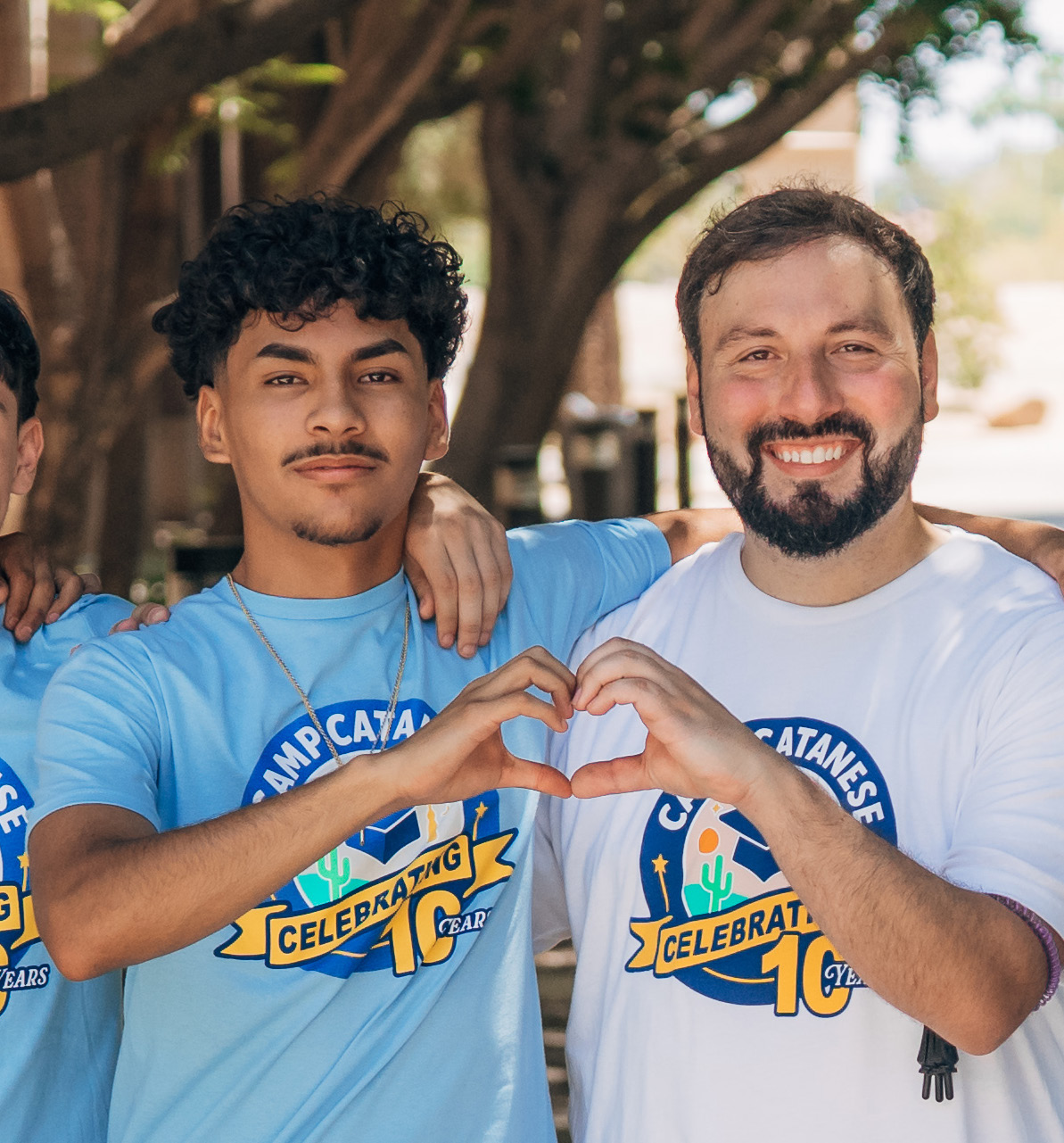
Jason Catanese doesn’t look like a disruptor. A Northwestern graduate with the polished demeanor of the politician he once dreamed of becoming, Catanese is the founder, executive director and heart of the Camp Catanese Foundation. But to the students who mob him in the hallways of Pueblo del Sol and Morris K. Udall middle schools, he is simply “Mr. Cat” — the man who convinced them that a quadratic equation is the key to a different life.
In Arizona, the path to a prosperous future is paved with numbers — specifically, the eighth-grade math proficiency scores that act as a litmus test for high school success. Currently, according to Center for the Future of Arizona’s Education Progress Meter (co-developed by CFA and Education Forward Arizona), only 27 percent of Arizona students are hitting that mark, a staggering distance from the state’s goal of 69 percent.
But at Camp Catanese, these aren’t just statistics; they are opportunities for intervention. Catanese is translating cold data into warm, human success stories, transforming raw potential into something luminous, and in the process, reframing what’s possible.
The Pivot from Policy to People
Catanese’s journey didn’t begin in a classroom. “I always thought I was going to be a politician,” he said. “I went to Northwestern, studied political science. My goal was to go to law school and then someday be the president.”
The shift occurred during a junior-year internship in D.C. He found himself uninspired by the marble halls and the distance between policy and people. He returned to Chicago and found his “why” in the most human of places: a 30-hour dance marathon for children with heart defects and a stint as a camp counselor.
This desire to serve was deeply rooted in his upbringing. Catanese attributes the person he is today to his parents, whose daily dedication to helping others inspired his own life’s work. “They really are why I love serving others,” he said. “They do it for other people every day.”
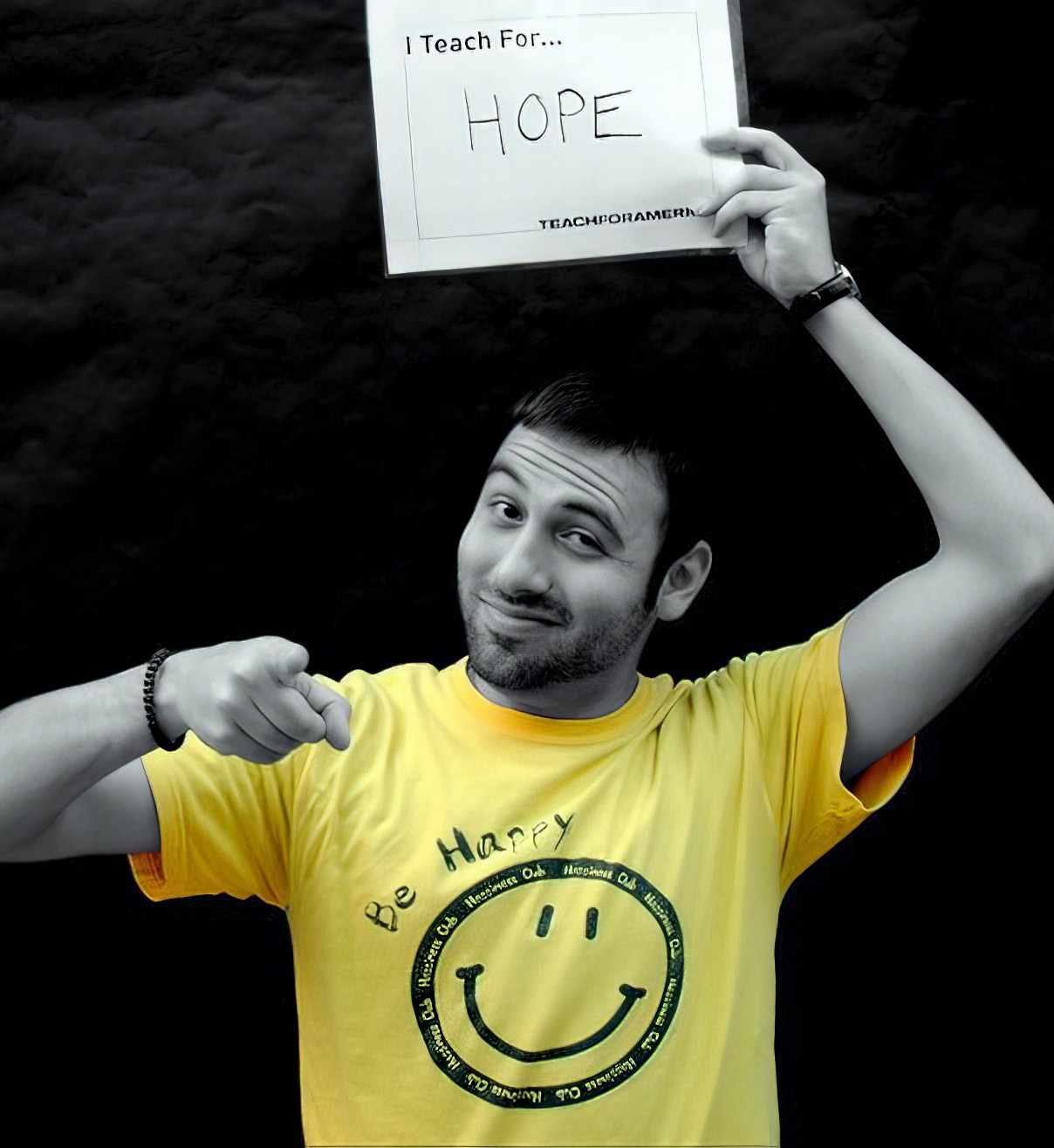
When two friends suggested Teach For America in Phoenix, Catanese jumped. He told his mother, “I think this is going to be the most important thing I ever do.” He planned to stay for two years. He has now been here for 15.
“The first day I met my students, I realized they were going to teach me more than I was probably gonna teach them,” he said. “I started to see that talent is equally distributed, but opportunities are not.”
The After-School Algebra Underground
Catanese’s “aha!” moment came when he looked at the curriculum at his Maryvale school. In affluent districts, students are tracked toward calculus by taking algebra in eighth grade. In his district, that path barely existed. Over a 20-year span, only a handful of kids had passed the advanced math milestones.
“I read an article that said if a kid took calculus by the time they graduated high school, they had an 83 percent chance of graduating college within four years,” Catanese said. “That was something we could control. We could control the math. That was a higher indicator than socioeconomic income, ZIP code or race.”
Denied a spot for algebra during the school day due to administrative anxieties over state testing, Catanese did what any visionary would: He started an “underground” after-school class. He went door-to-door, sitting in parents’ living rooms, explaining the data. He expected 20 kids. Eighty-six showed up. By the end of the year, 99 students passed the Phoenix Union placement exam. Maryvale suddenly had the largest advanced algebra program in the city. The data point had become a person.
From “Mr. Cat” to “Camp Cat”
The transition from classroom teacher to nonprofit leader happened at a coffee shop. Two of Catanese’s former students, then in high school, came to him for tutoring. They were brilliant, on the path to calculus, but they were terrified. They asked, “Have you heard of something called the ACT? Is it important?”
Catanese realized then that math was the gateway, but the bridge to college was still missing. That night, he and his co-founder, Erika David Parr, stayed at a coffee shop until they were kicked out, sketching the blueprint for Camp Catanese.
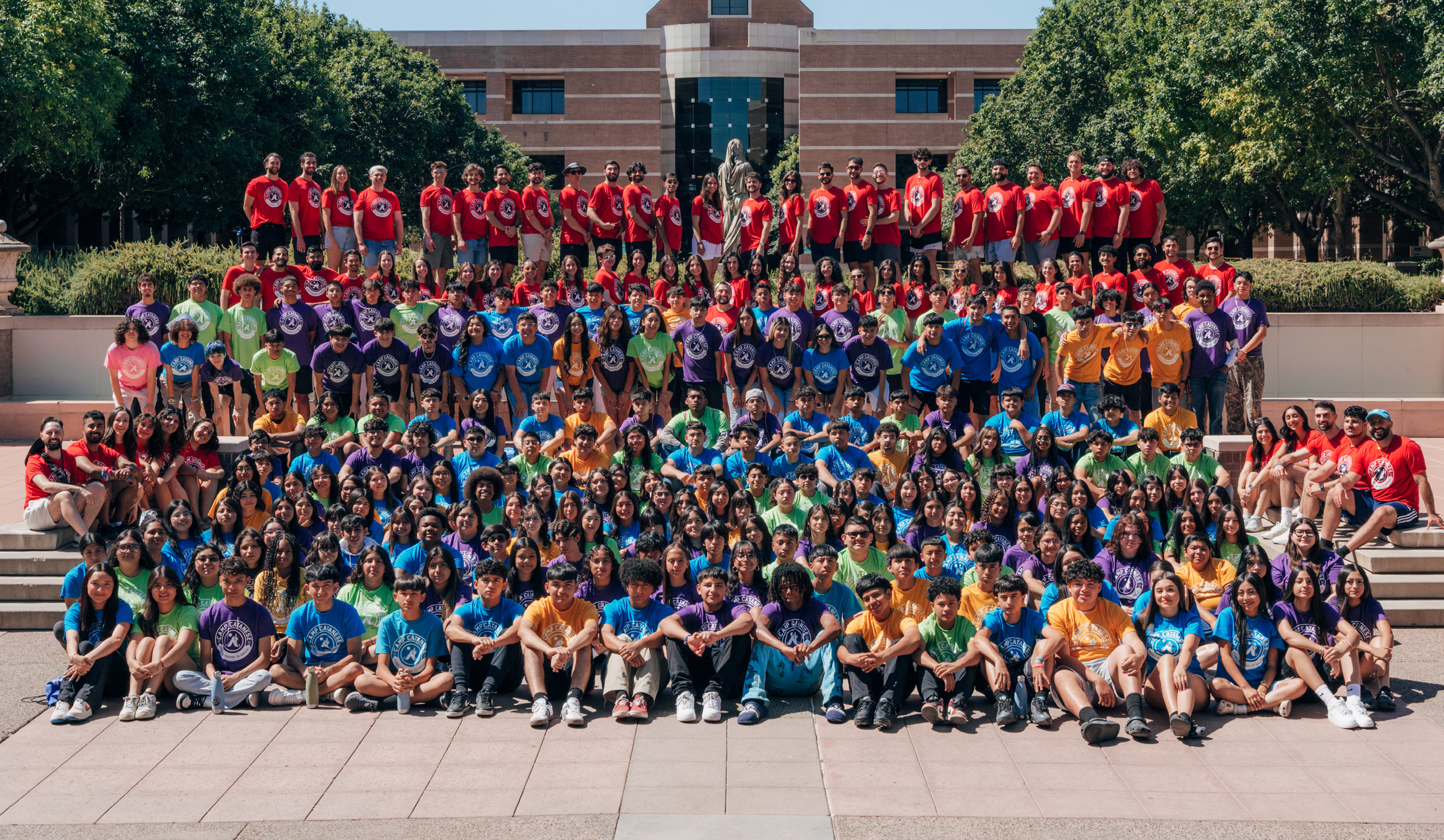
What started in 2016 as a summer camp for 120 former students has exploded into a year-round college-access powerhouse. The demand is an indication of the hunger in the community. Two years ago, the camp filled up in six hours. This year, 550 spots were claimed in four and a half hours, with hundreds more on a waitlist.
“One thing that’s really hard to quantify is a student believing that he or she can do something,” Catanese said. “At the beginning of the week, we survey kids, and 40 percent believe they can go to college. At the end of the week, 100 percent believe it.”
The stats back up the sentiment: 93 percent of Camp Catanese kids go to college, and 70 percent graduate within four years — triple the national average for their demographic.
The Circle of Service
The program’s reach now extends far beyond Arizona. While many students excel locally at ASU’s Barrett Honors College and the University of Arizona, others are planting the Camp Catanese flag at schools across the country.
Perhaps the most telling metric of the program’s success isn’t where the students go, but how they come back. Two current staff members, Karla and Darian, are former Camp Cat students who returned to Phoenix to serve its mission after graduating from Yale and Harvard, respectively.
“They could have had any job in the world,” Catanese said. “But they chose to come back and work here. It’s humbling.”
Stories From the Campfire
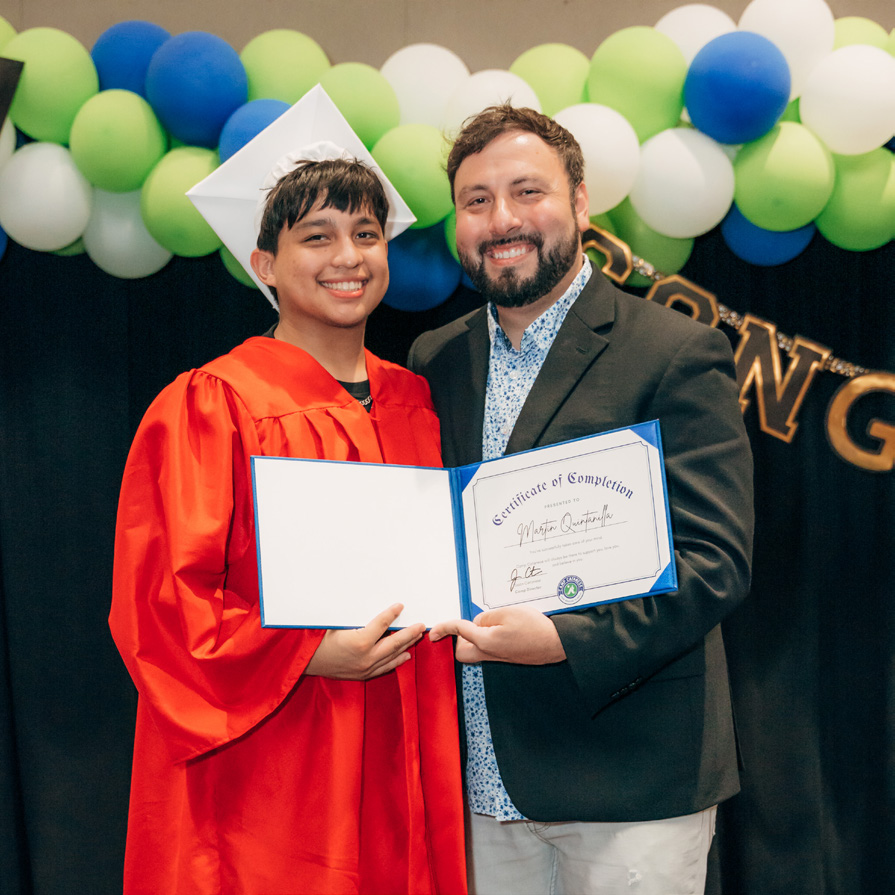
To understand the “Catanese Effect,” you have to listen to the students. At the end of every camp, during a graduation ceremony that many find more moving than their actual high school commencements, the students speak their truth.
Adrian Ramirez, a former camper, recalled asking Catanese how he manages to be in so many places at once for his students. Catanese responded with a parable about a man at the gates of heaven being asked to “show his scars.”
“In your time on Earth, was there nothing you found worth fighting for?” Ramirez recounted. “I want you to know that you are somebody worth fighting for. Mr. Cat told me that his strengths come from you.”
For many, Camp Catanese becomes the “family” that remains when biological families are fractured by tragedies like the opioid crisis or mental health struggles. Cal Wylie shared a harrowing journey of finding his mother lifeless during his eighth-grade spring break, having already lost his father to an overdose.
“I crawled out of my bed for the first time in days and headed to school,” Wylie said. “Luckily, the first person I saw that day was Mr. Cat. He gave me a hug and made me feel like everything was gonna be OK. Camp Cat became a home for me … my reason to keep pushing.”
Wylie, who later faced homelessness and the loss of the uncle who raised him to lung cancer, credits the camp’s community with saving his life. He is now a freshman at ASU, studying to become a teacher himself.
Then there is Martin Quintanilla, who suffered the crushing trauma of losing his father to suicide in 2023.
“I knew after everything happened that I needed a break from the world,” Quintanilla said. He reached out to Catanese, who immediately made space for him at camp. “I refuse to allow hardships to become an excuse for mediocrity… April 26, 2023, is a day I will never forget, but it is also a day that reminds me of the enduring power of the human spirit.”
Scaling the Hope
Catanese is no longer just a teacher; he is a systems-thinker. Working with partners like Center for the Future of Arizona, he uses the Education Progress Meter to identify where the gaps are widest.
“We’re using data and our previous failures to inform how we help the next group,” he said. When Saturday ACT prep sessions saw low attendance because students had to work to support their families, Catanese didn’t blame the kids — he and his team built an app. “When kids are choosing survival, it’s hard to prioritize something right in front of you. So we’re building a tool they can use in five-minute bursts.”
Catanese’s vision for the next 10 years is “bigger and bolder.” He sees his work as a model for the 1.6 million kids in Arizona. “We envision Arizona as one of the examples in this country of what is possible,” he said.
The Man Behind the Mission
While the “Catanese Effect” is most visible in the classroom, the man himself is driven by energy that doesn’t stop when the school bell rings. Even with a schedule that would exhaust a career politician — teaching until 1 p.m. before pivoting to eight or nine hours at the Foundation office — Catanese remains a fixture in the local community.
“I love being a great community member,” he said.
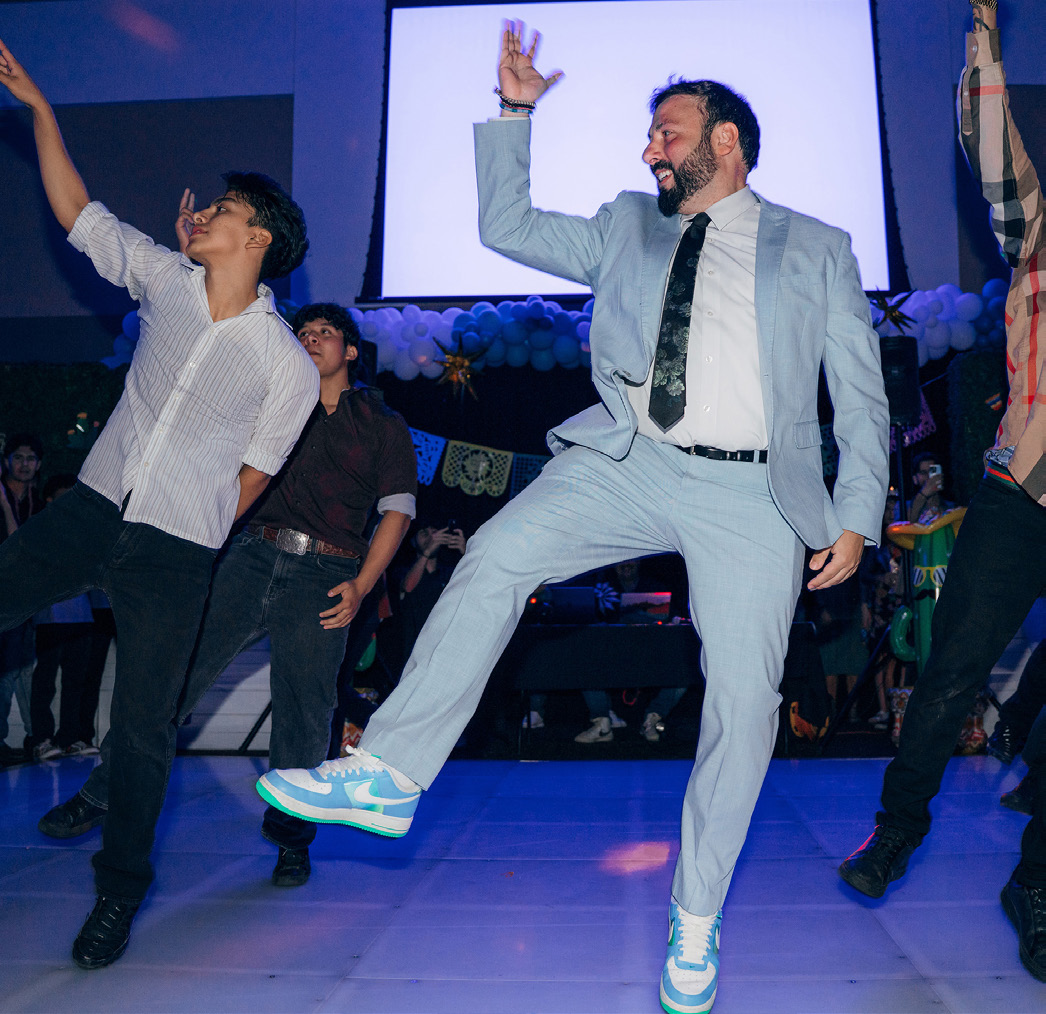
This isn’t just lip service. Catanese has worked with the State Board of Education, coached soccer and spent years as a Sunday school teacher. When he isn’t analyzing the latest education data, he’s a dedicated uncle to his niece and nephew or traveling to recharge.
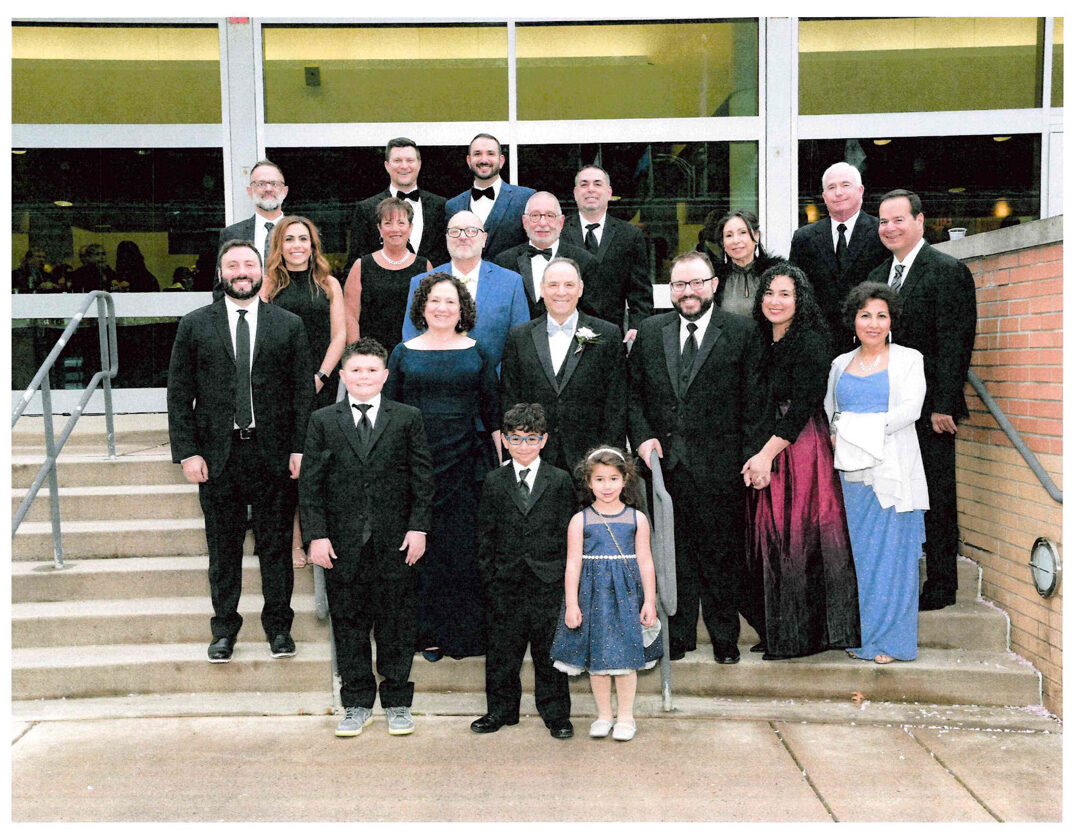
But even his leisure time is often viewed through the lens of mentorship. For Catanese, there is no “off-duty” switch because his hobbies are an extension of his philosophy: that being present is the greatest gift an adult can give a child. He recalls a fourth-grade teacher, Miss Hall, who once helped him build a Japanese pagoda out of a refrigerator box just because he mentioned he liked them. “I just remember the feeling of someone saying yes to me,” he said.
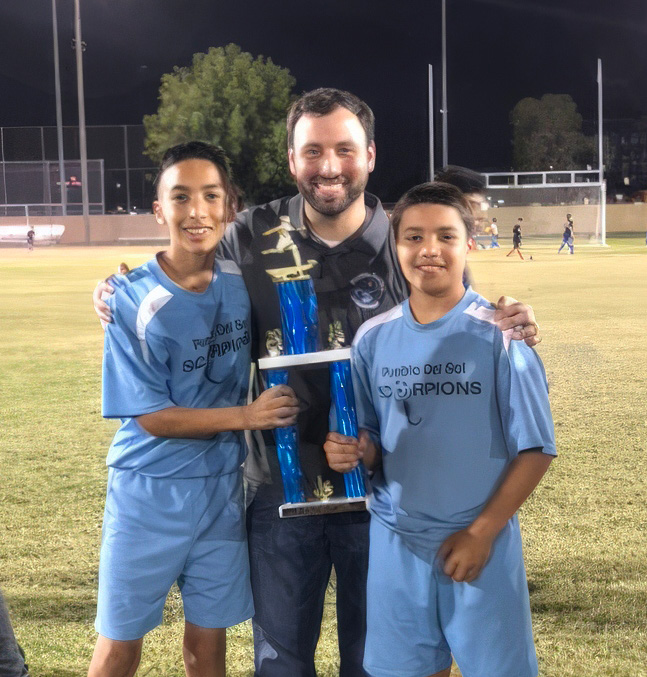
The Power of Presence
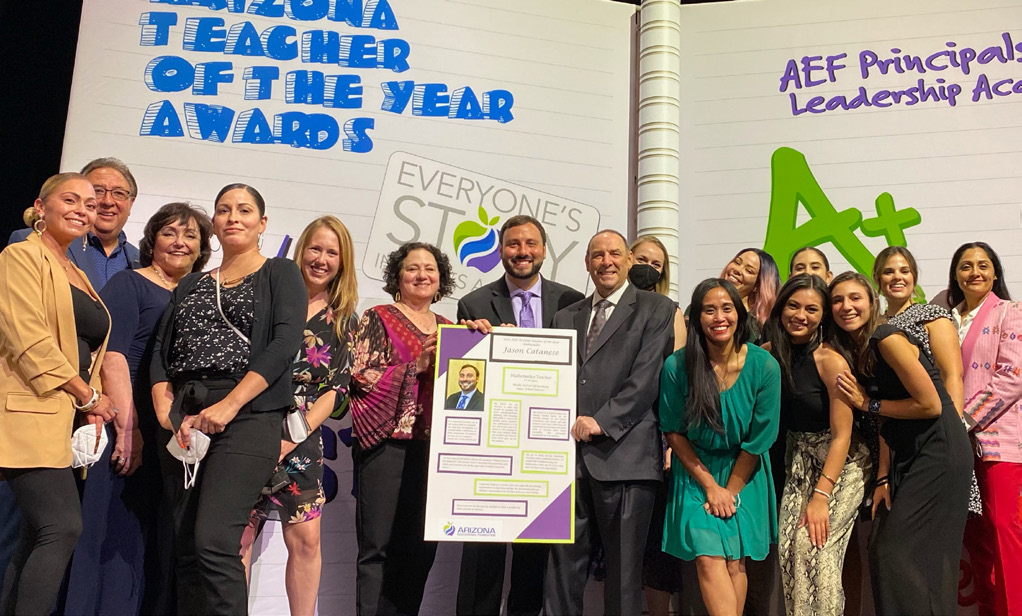
Despite his trophy case of accolades — including being named the 2022 Arizona Teacher of the Year and a recipient of the Teach For America Alumni Award — Catanese remains grounded in the “serve, don’t save” philosophy.
“We’re not here to save anyone,” he said. “We’re here to just serve. When we come from that mentality, we allow kids to see what they are capable of doing.”
As the workday ends, Catanese is likely still in his office, or a classroom or a soccer field. He traded a path to the White House for a path to the classroom, and in doing so, has found a different kind of power. Not the power of a title, but the power of a “yes.”
“Success in math in eighth grade is a key milestone,” he said, echoing CFA’s metrics. “But more importantly, these kids are walking away feeling hopeful and inspired and loved. They’re part of the Camp Catanese family now. And you don’t let family struggle alone.”
To learn more, visit campcatanese.com.

Karen Werner is the editor of Frontdoors Media. She is a writer, editor and media consultant. She has interned at The New Yorker, worked at Parents Magazine, edited five books and founded several local magazines. Her work has appeared in Sunset, Mental Floss and the Saturday Evening Post.