
A Collective Fight

As food insecurity rises, the Arizona Food Bank Network is doubling down on its most powerful resource: itself.
Every month, a record number of Arizonans are turning to food banks for help. One organization is building the network to meet that crisis head-on.
The Arizona Food Bank Network is a coalition of five regional food banks and nearly 1,000 food pantries and agencies across all 15 counties, working together to address hunger in the state. Together, the network feeds nearly 1 million people in Arizona each year.
AzFBN is not a food bank itself; instead, it’s an amplifier — raising awareness, coordinating massive food donations, and providing resources and education that empower its partners on the front lines. The organization’s vision is simple but ambitious: to create a hunger-free Arizona.
In the years that followed, the network’s agility was tested again when it took over sourcing fresh produce from Mexican brokers and growers on behalf of food banks across the Southwest. In 2024 alone, the AzFBN Produce Program directed a staggering 51.6 million pounds of food to its members.
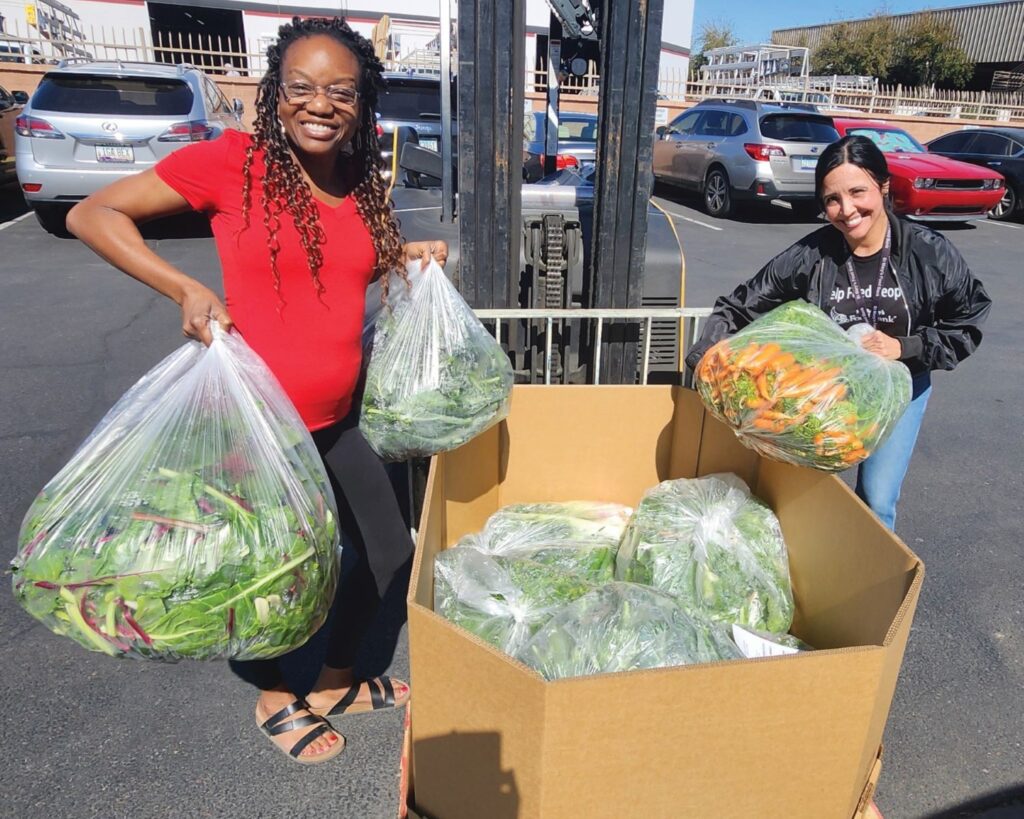
Thanksgiving food distribution. Images courtesy of AzFBN
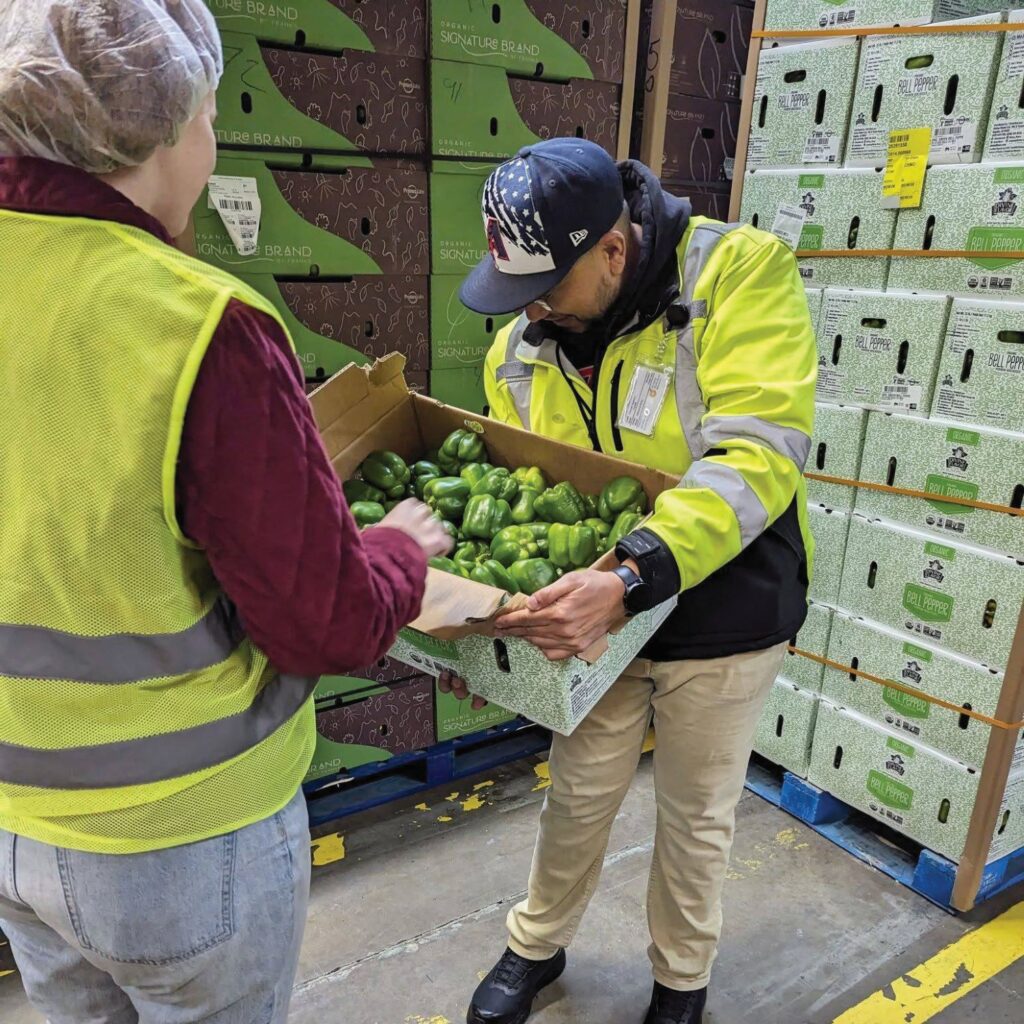
Operating from a newly purchased warehouse in Rio Rico, the program now repacks and distributes nearly 900,000 produce boxes each year — each filled with four to five varieties of fresh fruits and vegetables destined for family tables across the state.
Today, that spirit of resilience is being put to the test once again. Arizona currently ranks 22nd in the nation for overall food insecurity, and recent federal policy changes are placing additional strain on the state’s food distribution systems.
“We’re already seeing a record number of people coming to food banks every month for help, and that number is going to go up,” Shoemaker said. “I like to say that food banks find a way and are very resourceful organizations. They’re going to serve as many people as they can.”
AzFBN’s answer to this mounting pressure is to lean even harder into the collaborative model that defines it. By centralizing sourcing, leveraging economies of scale and sharing resources, the network maximizes efficiency for everyone. This strategic coordination allows AzFBN to achieve what individual organizations could not accomplish, because the work is not being done alone.
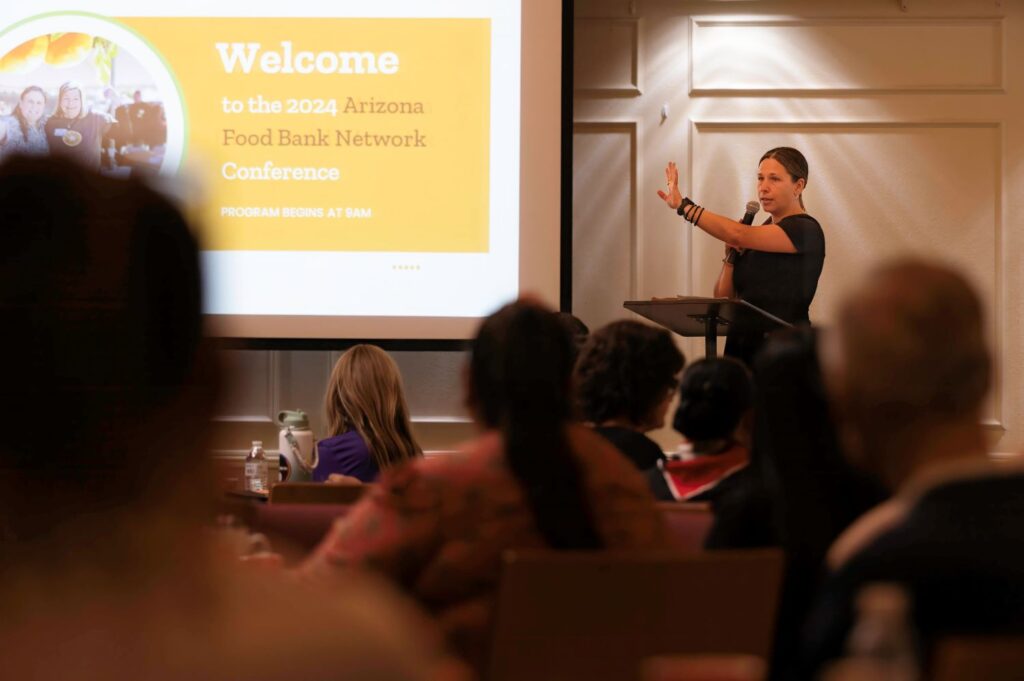
AzFBN has demonstrated remarkable resilience throughout its more than 40-year history. In fall 2019, the organization changed its name and brand to better reflect its evolving role. Just as the network settled into its new identity, it faced its first major test: a global pandemic.
“We were called upon to do a lot of different things very quickly and stepped into whatever role was needed by the state, county government and food banks at the time,” said Terri Shoemaker, executive vice president. “A lot of people had our number and used it because we were in a niche where we could be helpful to a lot of different people very quickly. This really changed who we were and what we looked like.”
“This collaborative notion makes the ‘n’ for network a capital ‘N’ for us because we do this really well, and it’s hard. It takes a lot of talking, reassuring and living up to promises to be the best organization we can be on behalf of our member food banks and all the people they serve,” Shoemaker said.
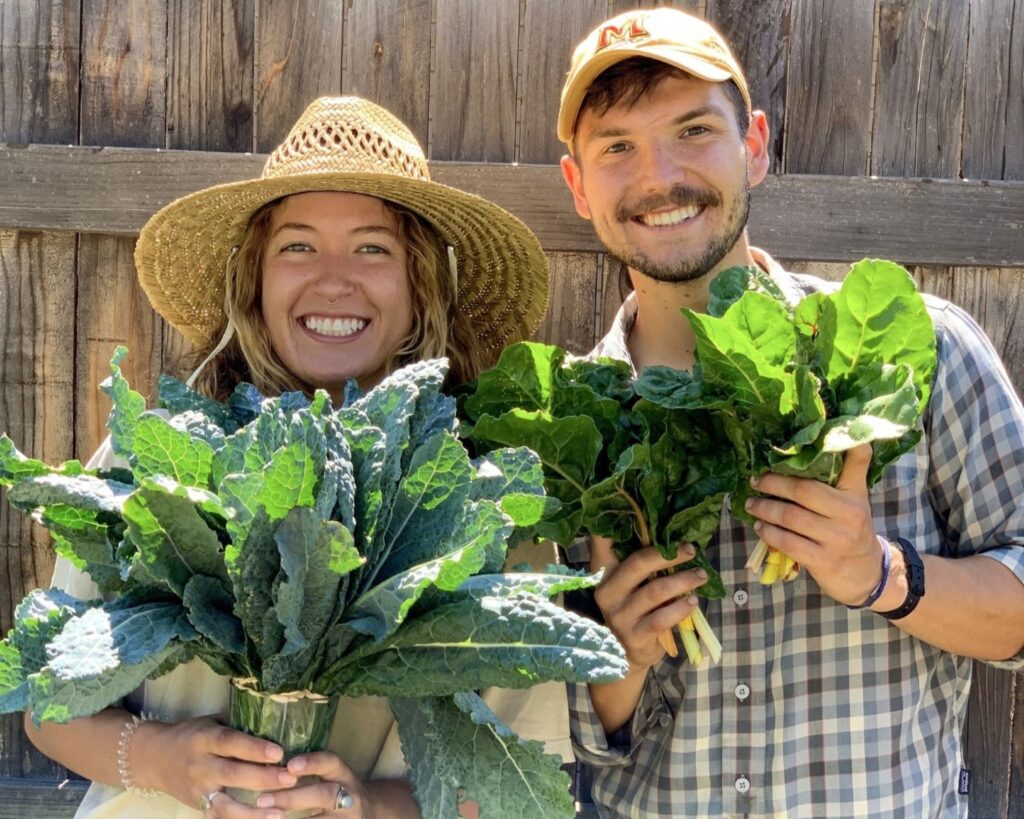
This spirit of communal cooperation is fueled by a profound sense of gratitude for every person who joins the cause. “We are grateful for anyone who sees someone who doesn’t have enough as something we should do something about,” Shoemaker said. “We are a network of people who have said that hunger is not OK. This extends to people who work at food banks, our boards of directors, people who donate food or funds, and corporations that organize a food drive during the holiday season.”
The Tohono O’odham phrase, “All of us together,” perfectly describes this charge. It is a fight that Arizonans can win, collectively. To learn more, visit azfoodbanks.org.

Julie Coleman is a contributing writer for Frontdoors Media. She is Principal of Julie Coleman Consulting, providing strategic philanthropy consulting services for individuals, families, businesses, foundations and nonprofit organizations.