
10 Questions With…Jonathan Levine
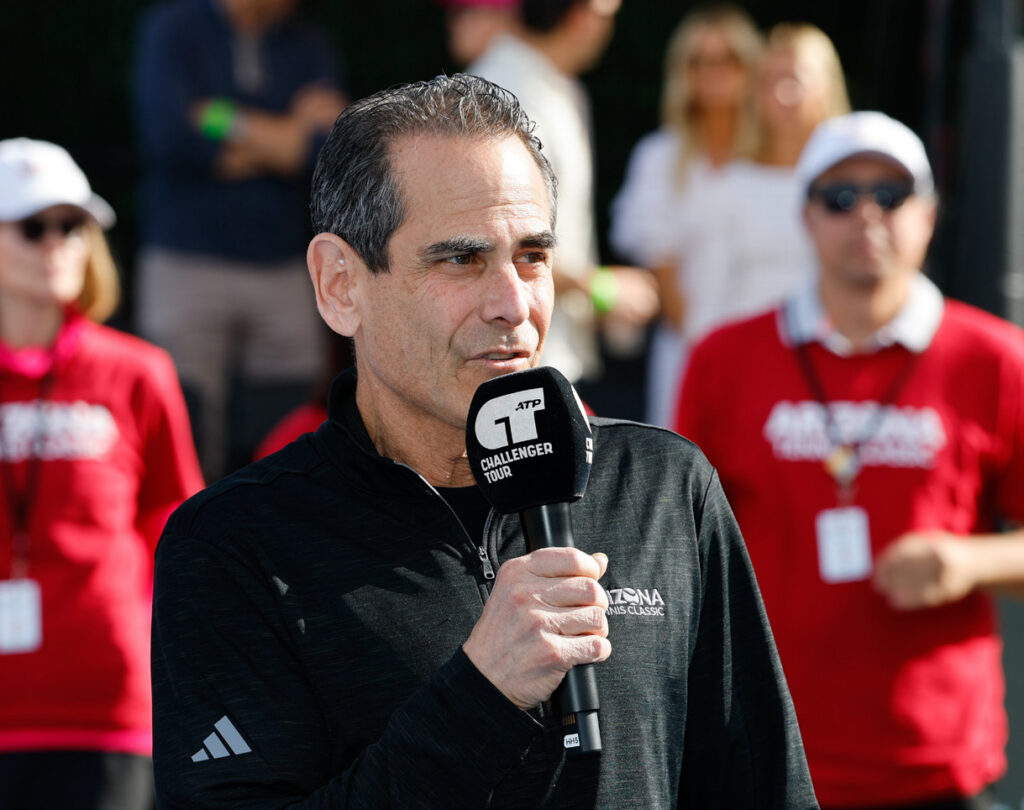
You were born and raised here in the Valley, and you grew up dominating the local junior circuits before going pro. Do you consider Phoenix a “tennis town?”
I absolutely do. Growing up here, the tennis community always felt tight-knit but incredibly competitive. We have the weather, the facilities and a long history of producing great talent. But for a while, we didn’t have a marquee professional event to call our own. That was the void we wanted to fill with the Arizona Tennis Classic — to give this “tennis town” a world-class event that matches the passion of the local players and fans.
Your father, Bill Levine, is a legend in philanthropy in our community. How did his approach to business and giving back influence the way you run the Arizona Tennis Classic today?
When we started this tournament, the goal wasn’t just to host great matches; it was to create a sustainable engine for local charities. His influence is why giving back isn’t a side note for us — it’s the foundation of the entire event.
Speaking of history, you have a unique claim to fame: You were the first player to beat Andre Agassi in a professional tournament. Did you have any idea at the time that you were playing a future legend?
It was in the mid-80s, and Andre was this teenager with a massive forehand. Even then, you could feel his charisma and see that his ball-striking was on another level. It’s a fun piece of trivia now, but back then, I was just trying to figure out how to handle that return of serve!
You also reached the quarterfinals in doubles at both the French Open and the U.S. Open in 1988. Looking back at your time on the tour, is there a moment that still gives you chills?
Walking onto court at Roland Garros or playing under the lights at Flushing Meadows — those moments never leave you. But the real chills come from the camaraderie. Playing doubles with Eric Korita and making those deep runs together was special. There’s a specific energy at a Grand Slam quarterfinal where the air just feels different. I try to bring a taste of that intensity to our Center Court here in Phoenix.
Transitioning from playing professionally to running a major tournament is a big leap. What is the biggest lesson you learned as a player that you use as a tournament director today?
The importance of the player experience. On tour, you remember the tournaments that treated you well — the ones where the logistics were seamless and the atmosphere was welcoming. We’re obsessed with the details: the practice courts, the food, the transport. If the players are happy and relaxed, they play better tennis, and the fans get a much better show.
The Arizona Tennis Classic takes place during the second week of Indian Wells. How does that timing benefit the fans here in Phoenix regarding the caliber of players you attract?
It’s our secret sauce. Because we are a premium Challenger 175 event, players who might have had an early exit at Indian Wells can travel a few hours east and keep their momentum going. It allows us to feature Top 50 talent that you wouldn’t normally see in a Challenger draw. Our fans essentially get Grand Slam-level talent in a boutique, intimate setting.
Phoenix Country Club is a historic venue. How does the setting contribute to the “up-close and personal” vibe of the tournament compared to the huge stadiums at Grand Slams?
There’s a soul to Phoenix Country Club that you can’t manufacture. At a Grand Slam, you’re often hundreds of feet away in a concrete stadium. Here, you’re so close you can hear the players breathing and see the spin on the ball. It’s “boutique” tennis. You can grab a drink, sit a few feet from a current or future star and really feel the speed of the pro game.
Since 2019, your event has donated more than $500,000 to local charities. One of your beneficiaries is Serve the Future, which helps underserved youth. How do you see tennis as a tool for opening doors for kids?
Tennis teaches you self-reliance and resilience; it’s just you out there. For kids who face challenges at home or in school, the court is a place where hard work leads to direct results. Through Serve the Future, they’re not just teaching a sport; they’re providing a safe environment to learn life skills they might not have access to otherwise.
You also support Phoenix Children’s. Is there a story from your work with the hospital that drove home the impact of these donations?
It’s less about one story and more about the faces of the families. When we visit the hospital or have patients at the tournament, you realize that for these


Frontdoors Media celebrates the people and groups who give generously and work to build the future of our community. It’s the premier source of information – and inspiration – for those who strive to make the Valley of the Sun a better place to live.